
What are you Looking for?
What are you Looking for?



What are you Looking for?
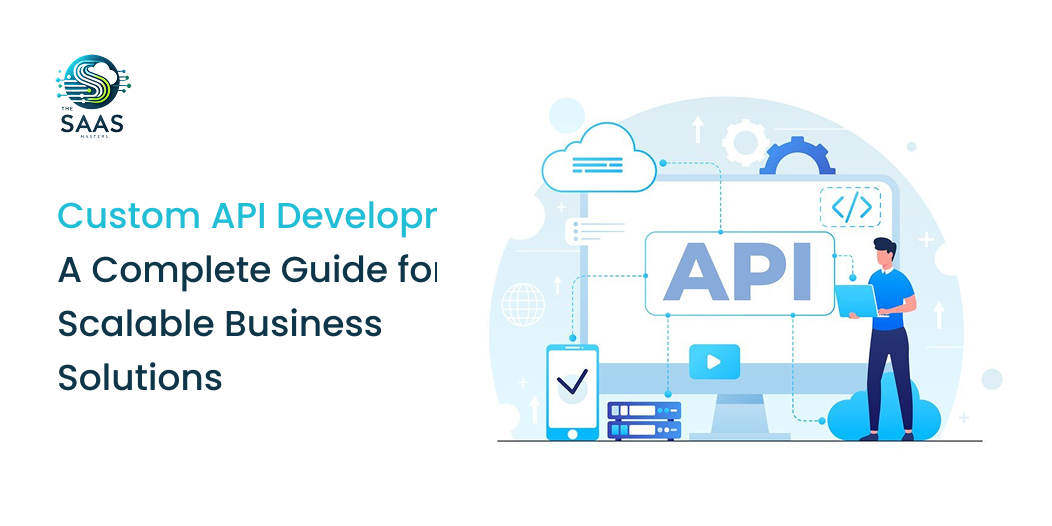
In today’s world, software programs need to work together appropriately to help people develop new products and come up with innovative ideas. For people who launch companies, using different services and checking how well a product works can be really tough. This is where making a custom API solution comes in. It helps create software solutions that can easily grow with the company and stay up-to-date with the technology. Custom API development services are extremely important for software programs to work well together and support ideas. API-driven services will play a major role in business growth in the coming years.
This guide is intended for founders who want to understand the API development process most simply. It includes everything from fundamental concepts to recent deployment. A custom API development services company helps businesses assist cooperation and data exchange of their custom apps with each other or with third-party apps.
Here, we have explained about API design, security, and seamless integration. With the correct understanding, one can make wise decisions and turn business ideas into a successful digital product.
Explore our portfolio, technologies, and Third Party API Integration expertise to see how SaaS Masters delivers scalable and efficient custom API solutions for businesses.
An API (Application Programming Interface) is a regulatory framework that enables various software applications to converse with each other. It functions as a connection, helping systems share data and functionality in a simple and systematic approach.
APIs provide a clear interface that hides complicated technical features. This means developers can use features from another application without needing to understand how it works internally. It saves time and makes software development faster and easier.
In simple terms, an API works like a contract between systems. It determines what requests can be made, what data can be shared, and what responses will be received. This ensures effective and dependable communication, even if the applications use several techniques, platforms, or programming languages.
To learn how an API works, let’s look at a simple illustration. Imagine a user is visiting a travel website or app to book a flight. The user can provide more information, such as departure city, travel date, time, and destination.
Once the user submits the detailed form, they can view a list of available flights with prices, timings, and seat availability. This process works because of APIs.
The travel platform sends users’ requests to airline databases through an API. The API retrieves the required data and sends it back to the website in real time. This allows users to see accurate and updated flight information quickly.
In simple terms, an API acts as a bridge between the booking platform and the airline system. It enables smooth, two-way communication and data exchange between different systems.
There are different types of APIs used for communication, with REST and SOAP being the most common in modern software development.
APIs help many systems and applications work together easily. This makes business operations more efficient. APIs connect systems so they can share information and work together smoothly. This improves productivity.
With custom API development, businesses can build scalable applications and easily add recent features without impacting the existing regulatory framework.
APIs enable businesses to share their services and data, helping developers and partners produce new solutions and grow a strong digital sphere.
API integration services enable users to use third-party tools and data, saving time and reducing development costs.
APIs authorize persistent communication between mobile apps, cloud platforms, and software systems, ensuring real-time data access and improved performance.
APIs can be divided into types based on how they work and what they do. Here are the common types of APIs:
Known as REST API development, these are the most extensively used APIs in web development. They use HTTP to help websites and applications communicate and share data easily. This makes it simple for websites and applications to talk to each other.
Use XML-based messaging. Are primarily used in big companies where security and reliability are highly important. They are good for companies that need to keep their data safe.
A type of API that enables users to ask for only the data they require. This makes it quicker and more productive to get data than with APIs.
They support real-time data transmission. This makes them ideal for applications that need updates, such as notifications or tracking systems.
Helps businesses work with partners. They let companies share data securely and work together to build services.
Using the type of API like Web APIs or GraphQL APIs helps enhance performance, scalability and overall software development efficiency. This is because the right API, such as REST APIs or SOAP APIs, can make a difference in how well software works.
A decent Application Programming Interface is really important for things to work together smoothly, to be able to handle things and to make it easier for developers to do their jobs. While developing an Application Programming Interface, it is helpful to think about what features are really necessary. This helps the Application Programming Interface work best and helps it be successful, for a time. Here are the
Key features of an Application Programming Interface:
A secure API protects sensitive data. It should use methods like API keys, JWT, or OAuth to allow only authorised access. Using HTTPS also ensures safe data transfer.
An efficient API should handle growing users and traffic without slowing down. Techniques like caching, load balancing, and data compression help improve API performance and speed.
A good API should be easy to understand and use. It should follow standard methods like GET, POST, PUT, and DELETE, with clear naming and proper error messages.
Well-written, engaging documentation helps developers understand how to use the API. It should include endpoints, request/response formats, and examples using tools like Swagger or Postman.
APIs should support updates without breaking existing systems. Versioning allows businesses to add new features while keeping older versions working smoothly.
Tracking API usage helps identify errors, performance issues, and security risks. This improves API reliability and overall system performance.
An API should be easy to update and expand. A modular and flexible design allows businesses to add new features without affecting existing integrations.
Focusing on these features helps build a secure, scalable, and high-performance API that supports business growth and efficient system integration.
We have already explained the key components of an API and the tools used in API development for web and mobile applications. But without following the right best practices, the API may not perform well. Here are the top 5 API development best practices to build secure and scalable solutions:
Throttling helps control API traffic and prevents overload. It protects the system from threats like DoS attacks and ensures smooth performance.
Some systems only support GET and POST requests. By enabling HTTP method override (like PUT or DELETE), your REST API development becomes more flexible and compatible.
Providing SDKs and reusable code helps developers build and integrate APIs faster. This improves development speed and reduces effort.
Security is essential in custom API development. Use token-based authentication to protect data while keeping the user experience simple and fast.
Good documentation makes it easy for developers to understand and use your API. It should include endpoints, examples, and steps for integration, helping save time and cost.
Following these API development best practices helps create secure, high-performance, and easy-to-use APIs for better business results.
The cost of building an API depends on its features, complexity, and security requirements. On average, a simple API costs approximately $20,000. This usually includes a secure, well-documented, and fully operational solution developed by an experienced API development company with skilled developers.
This complete guide explains everything that is needed to know about making APIs. A well-developed custom API solution is the core of a modern digital business. It helps optimise connectivity, supports growth, and enables scalable and innovative solutions. This guide explains to the user the basic knowledge to start their API development journey with confidence.
Looking to build powerful and future-ready solutions? With over years of experience in API development services, our expert team is ready to help. Get in touch with us today to discuss your project and grow your business. Our Custom API Development Services help businesses build secure, scalable, and high-performance APIs for seamless integration, real-time communication, and efficient data exchange.
A skilled and experienced API development services company like SaaS Masters helps businesses establish scalable, secure, and high-performance APIs for modern digital solutions.