

You build the prototype. We help when it needs to become a real SaaS product.
The SaaS Masters partners with AI app builders, no-code consultants, product studios, agencies, and fractional CTOs when a client’s MVP needs real engineering, security, backend architecture, deployment discipline, or long-term maintainability.
Bring us in when the product needs production engineering without blowing up the partner relationship.
We help with the parts clients start asking about after the first impressive prototype: data safety, roles, payments, APIs, deployment, and maintainable code.
For builders and consultants who want to keep the client relationship when the work gets more technical.
This page is for Lovable consultants, Bubble consultants, no-code agencies, AI app builders, product studios, design agencies, fractional CTOs, MVP consultants, startup coaches, and agencies whose clients need SaaS engineering backup.
You build prototypes, MVPs, or no-code/AI apps for founders.
The first version proves the concept and gives the client something real to react to.
Clients ask if the product is safe enough to launch.
That question needs engineering review, not just another prompt, page, or plugin.
They need backend, auth, roles, payments, or integrations.
We help with the architecture and implementation that a prototype often skips.
You want to keep the relationship.
Instead of sending them away randomly, you can bring in a senior engineering partner.
AI and no-code tools can get a client to demo fast. Production questions are different.
Once founders think about real users, payments, team accounts, client data, investors, or customers, the conversation changes from “can we build it?” to “can people safely rely on it?”
Can real users use this?
The app needs to handle real usage paths, edge cases, support workflows, and state changes.
Is the data safe?
Auth, roles, Supabase RLS, tenant boundaries, file access, and admin actions need backend enforcement.
Can we charge money?
Stripe, subscriptions, webhooks, entitlement logic, payment failures, and account states need cleanup.
Can this be maintained?
Another developer should be able to understand, deploy, debug, and extend the product without guesswork.
We turn generated-code risk into a practical production plan.
- Identify the code paths that can leak data, break payments, or confuse user roles.
- Rank what needs to be fixed before launch and what can wait.
- Give partners a cleaner way to explain the production handoff to the client.
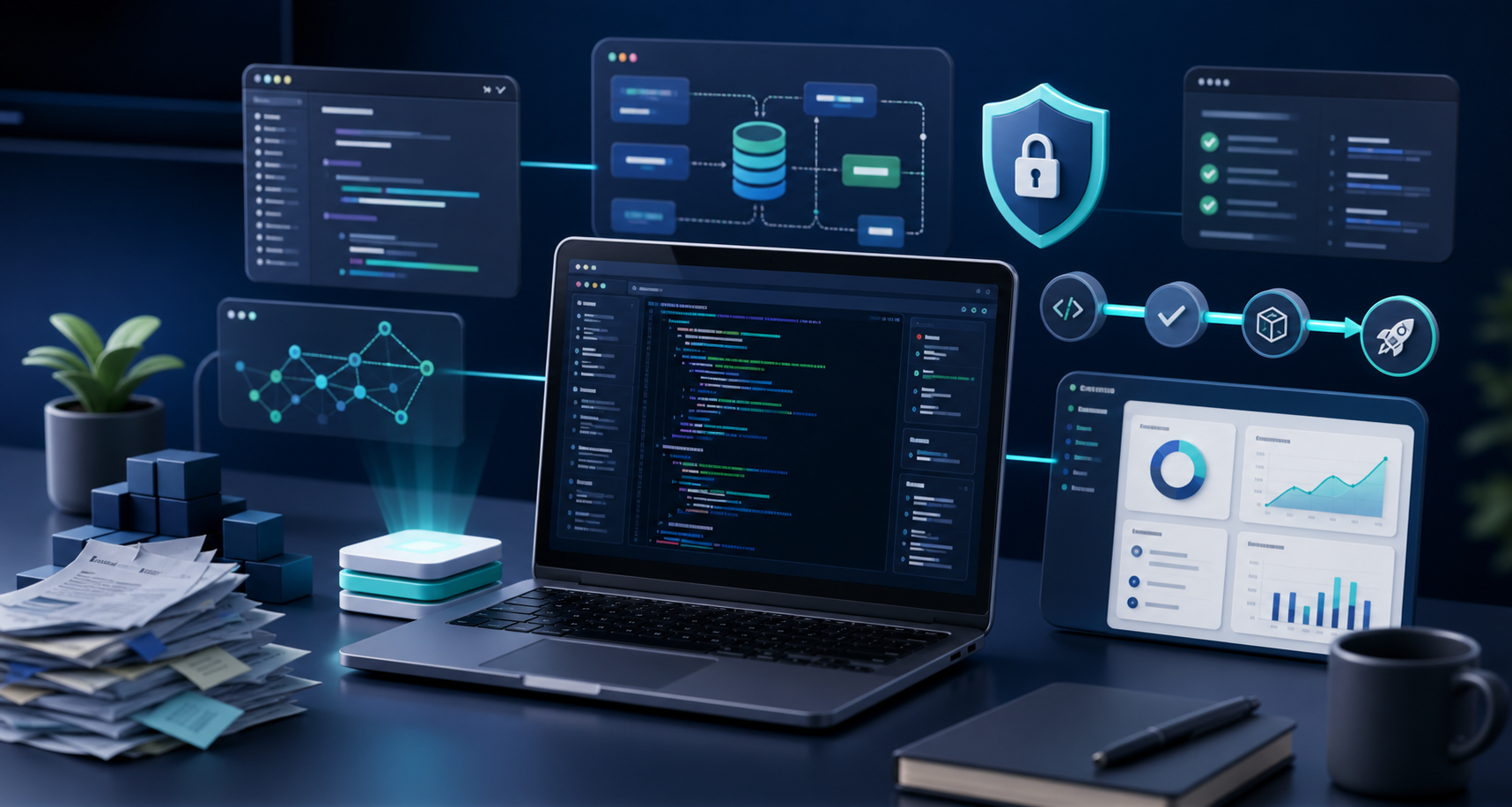
The SaaS Masters handles the engineering work that turns prototype risk into a clearer production path.
We focus on practical implementation: backend architecture, database cleanup, Supabase RLS, auth/RBAC, Stripe bugs, API integrations, deployment cleanup, secrets, logging, backups, security review, codebase stabilization, rebuild planning, technical debt cleanup, and production handoff.
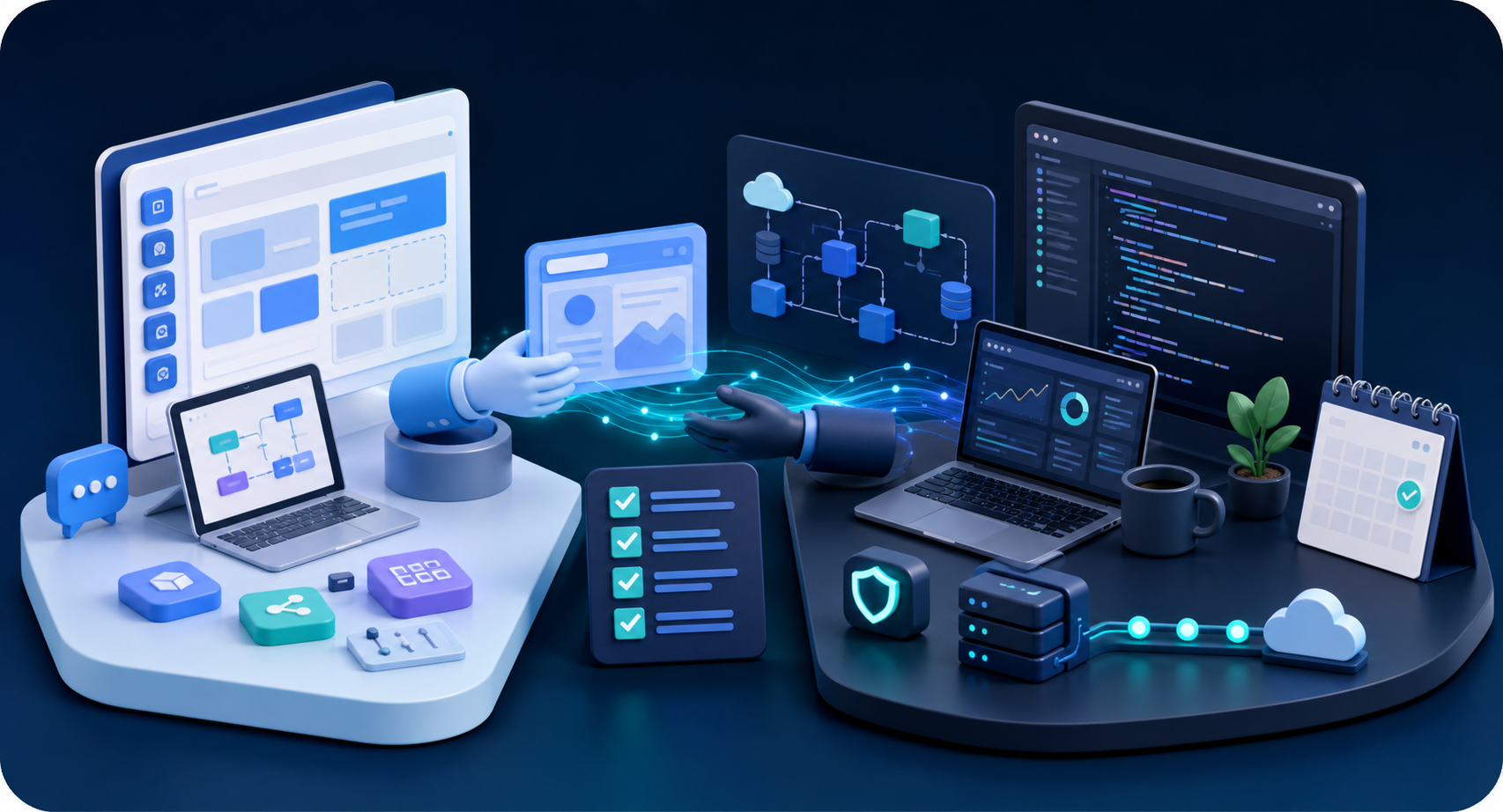
Stabilize the codebase
- Find generated-code shortcuts that break under real usage.
- Separate product logic from demo scaffolding.
- Clean up brittle data models and service boundaries.
- Document what should be fixed, rebuilt, or left alone for now.
Protect users, data, and payments
- Review auth, RBAC/RLS, tenant boundaries, and admin routes.
- Fix unsafe API paths, exposed secrets, and service-role misuse.
- Clean up Stripe subscription, webhook, and entitlement states.
- Rank risk by customer, revenue, and launch impact.
Make it launchable and maintainable
- Set up deployment, environment, logging, backup, and rollback discipline.
- Create a production hardening sprint or phased rebuild plan.
- Make the code easier for a real engineering team to own.
- Give the partner and founder a clear next-step estimate.
Real build experience behind AI-code rescue work.
The selling point is the takeover: when a prototype, AI-assisted product, or inherited workflow needs production engineering, the work becomes architecture, security, payments, roles, deployment, and maintainable ownership.
Recipe Check
A mobile-first AI food-quality product needed more than an AI prompt. The work was shaping a safer product boundary, backend AI analysis, fallback behavior, mobile packaging, and public support/compliance pages.
- Turned AI-assisted feedback into a bounded product experience.
- Added backend analysis and fallback states instead of relying only on front-end output.
- Supported launch readiness with privacy, terms, and support pages.
- Useful pattern for partners with AI-generated prototypes that need safer product rules.
PrimeCare
PrimeCare shows the kind of production thinking AI and no-code prototypes often lack: role-based records, staff workflows, audit-ready views, document capture, reminders, and hosted operational infrastructure.
- Structured sensitive operational records around real user roles.
- Created compliance-focused dashboards and audit views.
- Handled document readiness, expirations, reminders, and staff visibility.
- Useful pattern for partners whose prototype needs RBAC, workflow depth, and admin control.
Knue Laser
Knue Laser shows the value of turning a manual process into a manageable platform with logins, payments, lessons, quizzes, progress tracking, instructor tools, and a structure the client can keep using.
- Converted offline training workflow into a structured digital platform.
- Connected Stripe payment flow to course enrollment and access.
- Added progress tracking, completion tracking, and instructor/admin management.
- Useful pattern for partners whose prototype needs real accounts, payments, and operations.
Four practical ways to bring us in.
Different client situations need different boundaries. We keep the model plain before work begins.
Simple referral
You introduce the client, The SaaS Masters scopes, sells, and delivers the engineering work.
Co-delivery
You keep product, prototype, design, strategy, or client leadership while we handle the deeper engineering path.
White-label support
Possible for the right partner, but only after expectations, ownership, communication, and delivery boundaries are clear.
Rescue handoff
You send clients whose MVP has outgrown the tool, prototype, builder, or initial codebase and needs a stable next step.
A clean handoff protects the relationship and gives the founder a real next step.
Common handoff moments where senior engineering backup helps.
Lovable, Bolt, Cursor, Replit, or v0 MVP
The early win is that the prototype exists. The risk is that generated code often hides fragile assumptions around auth, data access, payments, deployment, logging, and maintainability.
- Codebase rescue audit with severity ranking.
- Production hardening sprint for the most dangerous risks.
- Rebuild-vs-refactor recommendation before the client spends more.
Bubble or no-code app needs deeper backend work
A no-code product can validate the business workflow quickly. The next step is often custom backend logic, cleaner data structures, API integration, role-based access, or a phased migration path.
- No-code to custom SaaS architecture plan.
- Custom backend/API sprint for the highest-value workflow.
- Data migration planning and phased rebuild sequencing.
Supabase data access is unclear
AI and no-code products often connect to Supabase fast, but launch readiness depends on whether policies, keys, roles, and server-side boundaries are actually protecting tenant data.
- Supabase RLS audit and fix plan.
- Policy cleanup for tenant boundaries and private data.
- Server-side route hardening for sensitive actions.
Stripe logic is broken
Many prototypes can accept a payment. The harder work is keeping accounts, subscriptions, failed payments, downgrades, webhooks, and entitlements consistent after checkout.
- Stripe payment-state audit.
- Webhook and entitlement cleanup sprint.
- Billing test plan for common edge cases.
Teams, admins, or permissions are needed
Founders often discover that the MVP needs more than login. They need account ownership, staff roles, client access, admin controls, invitations, approvals, and support visibility.
- RBAC and team-account design.
- Admin dashboard and internal-tool implementation.
- Permission hardening for sensitive workflows.
The demo has no production architecture
A prototype can prove demand while still lacking environments, deployment discipline, logging, backups, monitoring, data models, and code structure another developer can safely extend.
- Production architecture review.
- Technical debt and launch-risk ranking.
- Hardening sprint or phased rebuild plan.
Schedule a partner call.
Tell us how you work with founders and where engineering backup could help.
20 common partner questions.
Yes, when that is the cleanest path. We can also stay behind the scenes if the delivery model and expectations are clear.
- Direct client work is usually best when the founder needs technical explanation, codebase review, sprint scoping, or production-risk decisions.
- Behind-the-scenes work can make sense when the partner already owns the client relationship and wants engineering backup without changing the delivery model.
- Before anything starts, we agree on who leads calls, who sends updates, and who is responsible for decisions.
Sometimes. White-label support is possible after we agree on scope, communication, ownership, and who is responsible for client decisions.
- White-label support works only when expectations are written down clearly: scope, meeting rhythm, response time, code access, client-facing language, and approval flow.
- We need enough technical visibility to make responsible recommendations, even if the partner remains the client-facing lead.
- If the client needs direct technical explanation, we will say that early instead of letting the handoff become confusing.
We are building a referral program. Terms are agreed before work begins and paid only on closed, paid client work.
- Referral terms need to be agreed before the introduction turns into paid work.
- We do not promise public payout percentages on the page because referral structure can depend on scope, partner role, client ownership, and whether the partner stays involved.
- The cleanest referrals include context, decision-maker access, current blocker, budget awareness, and timeline.
Yes. We can review what should stay, what should be rebuilt, and how to move toward custom SaaS without losing the business workflow.
- We start by mapping what the no-code product already proved: user workflow, data structure, manual workarounds, revenue path, and customer expectations.
- From there, we decide whether the best move is a custom backend, API layer, partial migration, data cleanup, or a phased rebuild.
- The goal is not to shame the prototype. The goal is to preserve what worked and replace what will break under real usage.
Yes. We can review auth, RBAC/RLS, data access, Stripe, APIs, webhooks, deployment setup, logs, backups, and launch blockers.
- AI-built MVPs often look complete because the UI works, but launch risk usually lives in permissions, data access, payment states, admin routes, and deployment setup.
- We review the codebase, rank risks by severity, and identify which fixes matter before users, customers, or investors touch it.
- The output should be practical: what is safe enough, what needs a fix sprint, and what might need a rebuild path.
A good fit is a founder or operator with a working prototype, clear business need, and real production questions around users, data, payments, integrations, or maintainability.
- The strongest fit is a client who already has urgency: users waiting, pilots coming, revenue at stake, investor review, or a product that keeps breaking.
- We are less useful when the idea is still vague and there is no workflow, prototype, budget, or decision-maker.
- Good referrals usually involve one clear blocker: security review, Supabase exposure, Stripe bugs, backend cleanup, no-code limits, or production launch risk.
Bring us in when the client starts asking about launch readiness, backend risk, customer data, payments, integrations, performance, or whether the prototype can support real users.
- The right moment is usually after the demo proves interest but before the client keeps stacking more features on a fragile foundation.
- We can join early enough to prevent expensive rework, data exposure, broken billing logic, or a bad first customer experience.
- If you are hearing questions like "is this safe?", "can we charge?", or "can this scale?", that is a good time to talk.
No. The goal is to protect the client relationship and handle the engineering depth that the project now needs. The partner model is defined before work begins.
- We can support the original builder by taking on deeper backend, security, architecture, or production-hardening work.
- Some partners stay involved as product lead, UX lead, implementation lead, or client strategist while we handle the engineering layer.
- The relationship only works when everyone knows who owns scope, communication, approvals, and delivery.
Yes. We can review what the tool generated, identify launch blockers, and decide whether to harden, rebuild, or keep specific parts of the prototype.
- We look at the generated app like a production takeover: what is real product logic, what is demo scaffolding, and what is risky once users arrive.
- Common review areas include auth, database rules, API routes, environment secrets, payment logic, deployment setup, and maintainability.
- The recommendation might be a fix sprint, a partial rebuild, or a clean rebuild if the existing foundation is too fragile.
Yes. We can review RLS, tenant boundaries, auth, service-role key exposure, private records, admin access, backups, and data model assumptions.
- Supabase can be a strong foundation, but only when row-level security, storage rules, server-side routes, and role boundaries are set up carefully.
- We check whether users can read or write records they should not, whether service-role keys are exposed, and whether admin actions are protected.
- The goal is to turn vague database anxiety into a clear risk list and fix plan.
Yes. Common work includes webhook validation, failed payment states, subscription access, account entitlements, plan changes, and payment-related edge cases.
- Many MVPs can make checkout work but still fail at the subscription lifecycle: upgrades, downgrades, cancellations, failed payments, retries, and entitlements.
- We review webhook handling, event ordering, idempotency, plan access, and account state transitions.
- The outcome should be a payment flow the founder can trust before traffic or sales outreach increases.
Yes. A technical review, rescue audit, or focused fix sprint can make sense before committing to a larger rebuild or production handoff.
- A small first step is useful when nobody knows whether the codebase should be rescued, refactored, or rebuilt.
- We can start with a risk review, then produce a severity ranking, fix plan, rebuild/refactor recommendation, and next-sprint estimate.
- That helps the partner and founder make a decision before committing to a larger engagement.
That is agreed upfront. Some partners want a simple referral, while others want co-delivery or behind-the-scenes support.
- The relationship model should be explicit before the first real client call.
- If you want to stay involved, we can define what you own and what The SaaS Masters owns.
- If you want a simple referral, we can take the sales and delivery conversation from there while keeping referral terms clear.
The SaaS Masters scopes the engineering work we are responsible for. We can coordinate with the partner on product priorities, client context, and handoff details.
- We scope the engineering risk, implementation path, and technical tradeoffs because we need to be accountable for what we deliver.
- The partner can still provide product context, business workflow, user needs, client history, and what already has been promised.
- Good scoping separates "what the client wants" from "what must be true for the product to survive production."
We agree on the communication lane before work starts: direct client calls, partner-led updates, shared project notes, or a mixed model.
- Co-delivery usually needs a simple cadence: kickoff, technical review, fix plan, sprint updates, and handoff notes.
- We can communicate directly with the client, through the partner, or in a shared setup depending on the relationship.
- The key is avoiding surprise: no hidden scope changes, unclear ownership, or conflicting client messages.
Yes, when needed. We can review NDA requirements before receiving private code, sensitive product details, or client-specific documentation.
- NDA review is normal when private code, customer data, unreleased product details, investor materials, or client-sensitive workflows are involved.
- We still need enough information to responsibly evaluate risk, scope, and whether the project is a fit.
- Do not send secrets, credentials, or private customer data through informal channels.
That can still work. We can review specific risk areas, support a sprint, help with architecture, or collaborate with the existing technical team.
- Existing developers are not a blocker if the roles are respectful and clear.
- We can focus on the areas where senior backup is needed: architecture, security review, Stripe, Supabase, deployment, or launch-risk planning.
- The goal is to help the product succeed, not create confusion over who owns every line of code.
We will say so plainly. The recommendation may be hardening, refactoring, replacing risky pieces, or planning a phased rebuild instead of throwing everything away.
- Not every messy prototype should be rebuilt. Sometimes the right answer is a targeted hardening sprint.
- Other times, continuing to patch the foundation costs more than replacing the risky pieces.
- We help compare rescue, refactor, and rebuild paths based on user risk, business urgency, maintainability, and next-sprint cost.
No. We do not sell unsupported guarantees. We help review, prioritize, and implement practical engineering fixes that reduce risk and support compliance-aware product work.
- We can help make the product safer, more disciplined, and more compliance-aware, but we do not claim certification or guaranteed security from a landing-page review.
- Our work is practical engineering: find risk, prioritize it, fix what matters, document what remains, and help the client prepare for the right formal review if needed.
- This is especially important in healthcare, payments, private data, and regulated workflows.
We review the context, decide whether the client or partner fit is real, and usually suggest a partner call or next-step review if the project matches our work.
- We look at the partner type, client situation, urgency, tools involved, and whether the problem is a real fit for production engineering help.
- If it fits, the next step is usually a partner call, a client-context review, or a codebase/security audit path.
- If it is not a fit, we would rather say that plainly than force a bad project into the pipeline.